

Ever pulled a glass from the dishwasher only to find it wearing a gritty little film? Maybe there’s a smell, too—something sour that hits you the moment you crack the door open mid-cycle.
Nine times out of ten, the problem traces back to one part you’ve probably never thought about: the filter. It’s small. It sits out of sight.
And it does an enormous amount of work, catching the food scraps and debris that would otherwise wash right back onto your plates.Here’s the reassuring part. Cleaning it takes a few minutes, and you won’t need tools you don’t already own.
A filter that’s actually clean means dishes that come out clear, a kitchen that smells like a kitchen, and an appliance that isn’t quietly straining itself into an early grave.
This guide on how to clean dishwasher filter covers the whole picture—what the filter does, why it matters, and the precise steps to get it spotless.
Stick with it, and you’ll walk away with a simple habit that could save you a repair bill later on.
Understanding Your Dishwasher Filter
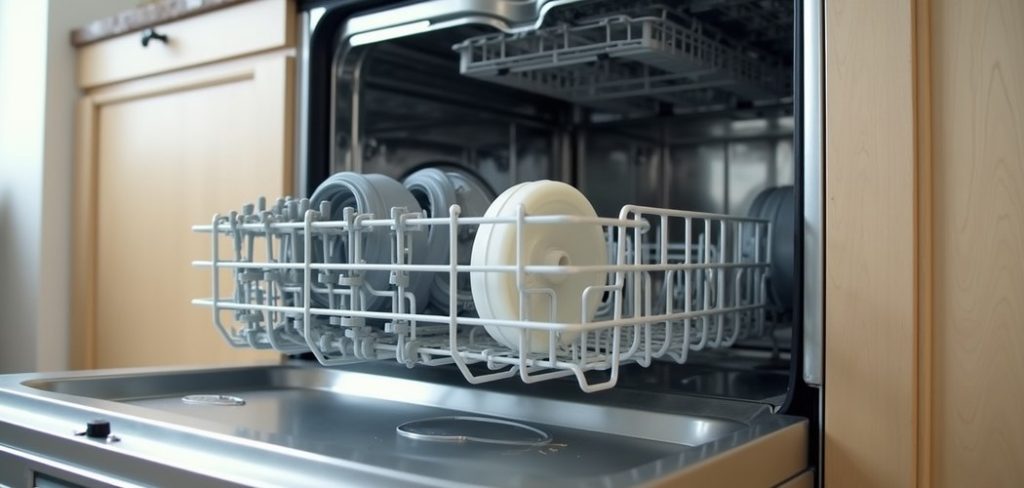
The filter lives at the bottom of the machine, usually tucked beneath the lower spray arm. Its job sounds unglamorous, but it matters a great deal: it traps the food scraps, grease, and grime rinsed off your dishes during each cycle.
Take that filter away, and all of that gunk simply gets recirculated—clinging to your dishes on the next pass, or worse, working its way toward the drain and the pump, where it can cause real trouble.Most dishwashers built in the last decade or so use one of two designs.
Manual filters have to be pulled out and washed by hand. Self-cleaning filters grind food particles down automatically, so they demand less of your attention. That convenience comes with a trade-off, though.
Self-cleaning models tend to run louder, and even they benefit from the occasional inspection. Not sure which kind you have? The manual will tell you, or you can just crouch down and look.
Knowing your filter type matters more than it seems—it shapes how you clean it and helps you avoid snapping a part you can’t easily replace.

Tools and Materials Needed
Nothing exotic goes into this job. Rummage through your kitchen, and you’ll likely turn up most of what you need already.
Warm Water and Dish Soap
A basin of warm, soapy water does most of the heavy lifting. It cuts through grease and softens food residue without harming the plastic or mesh the filter is made of.
Soft-Bristled Brush
An old toothbrush is honestly perfect here, though a dedicated soft brush works too. What you want to avoid is anything wiry or metallic—those can scratch the mesh and leave you worse off than before.
White Vinegar
Got hard water? If mineral deposits have crusted onto the filter, or if an odor just won’t quit, a soak in white vinegar tends to dissolve the buildup and take the smell down with it.
Microfiber Cloth or Sponge
Once the filter is out, you’ll want something soft to wipe down the housing and the area around it. A cloth or sponge does the trick.
Rubber Gloves (Optional)
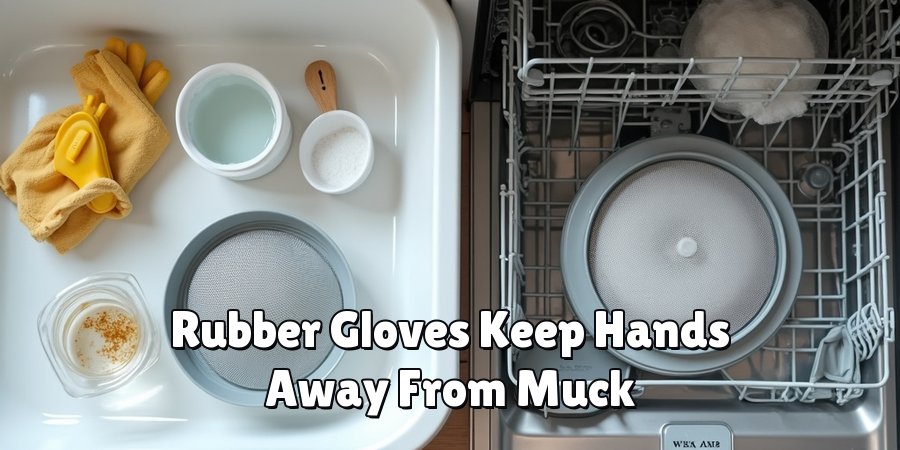
Handling trapped food debris isn’t everyone’s idea of a good afternoon. If that’s you, a pair of rubber gloves keeps things tidy and your hands out of the muck.
7 Simple Steps on How to Clean Dishwasher Filter
Step 1: Empty the Dishwasher
Clear everything out first—dishes, cutlery, the works. Then pull the bottom rack all the way out so the base of the machine is fully exposed. You want room to move and nothing in your way once you start.
Step 2: Locate the Filter
Peer down at the bottom of the tub, generally near the foot of the lower spray arm. You might see a cylindrical filter, a flat one, or a pairing of both. Struggling to find it? The manual usually has a diagram drawn for your exact model, which beats guessing.
Step 3: Remove the Filter
Most filters unscrew with a gentle counterclockwise twist, though a few just lift straight up. Turn slowly until it releases, then ease it out. Don’t force anything. If it refuses to move, go back to the manual and confirm you’re turning it the right direction before you put any muscle into it.
Step 4: Rinse Under Running Water
Hold the filter under warm running water and let it flush the loose particles away. Turn it as you go so the water reaches every side. The amount of debris that comes off with a plain rinse can be a little startling.

Step 5: Scrub Away Stubborn Debris
Dip your soft brush into the soapy water and work over the mesh and whatever buildup the rinse left behind.
Give the fine mesh screen extra attention—that’s where the small stuff and the grease tend to lodge themselves.
For heavier grime, or if there’s an odor you can’t shake, let the filter sit in white vinegar for ten or fifteen minutes before you scrub.
Step 6: Clean the Filter Housing
With the filter out, take a moment to clean the empty housing it came from. Wipe it down with your cloth or sponge to lift out whatever has settled there. Skip this, and the fresh grime waiting in the housing will start clogging your newly cleaned filter almost immediately.
Step 7: Reinsert the Filter
Once it’s clean and dry, set the filter back into its housing and twist clockwise until it locks. A filter that isn’t seated properly may rattle, or it may let debris slip past entirely—which rather defeats the point. Make sure it’s snug. Slide the bottom rack back in, and that’s it.
Ready? These seven steps on how to clean dishwasher filter will bring your dishwasher back to something close to its old self.
Common Mistakes to Avoid
The single most common misstep is cleaning the filter too rarely, or never touching it at all. Plenty of people have no idea their dishwasher even has a filter, let alone one that needs looking after.
Neglect it long enough, and you’ll notice the fallout: dishes that don’t come clean, smells that linger, and eventually a repair that costs a good deal more than a toothbrush and five minutes would have.
A quick rinse every couple of weeks and a proper clean once a month keeps things in check.
Then there’s the matter of tools. Wire brushes, steel wool, bleach—all of them can scratch or degrade that delicate mesh, and once the mesh is compromised, the filter stops doing its job well.
Soft brushes and mild cleaners like dish soap and vinegar are all you need. One last thing worth repeating: make sure the filter goes back in properly and locks.
Forget that step and food particles will sail right past the filter, which means all your scrubbing was for nothing.
Do You Need to Use Professionals?
For a routine cleaning? Almost never. This is a quick job most people can finish in under fifteen minutes using things already sitting in the kitchen.
Keeping up with it on your own is usually enough to keep the dishwasher humming along and your dishes coming out the way they should.There are exceptions, though.
Say you’ve given the filter a thorough clean and you’re still seeing poor drainage, water pooling at the bottom, odd noises, or a smell that won’t leave.
That may point to something further down the line—the pump, perhaps, or the drain hose, or the spray arms.
When the trouble runs that deep, a qualified appliance technician can find the fault and fix it properly, which spares you the risk of turning a small problem into an expensive one by poking around where you shouldn’t.
Frequently Asked Questions
How Often Should I Clean My Dishwasher Filter?
For most households, a light rinse every two weeks paired with a deeper clean once a month strikes about the right balance. Run the dishwasher daily, or tend to skip rinsing plates before loading them? You’ll probably want to clean it more often to stay ahead of the buildup.
Can I Put My Dishwasher Filter in the Dishwasher?
No—never run the filter through a wash cycle. The heat and pressure can warp or damage the plastic and mesh. Clean it by hand instead, with warm soapy water and a soft brush.
What Happens If I Don’t Clean My Dishwasher Filter?
A neglected filter tends to produce poorly cleaned dishes, bad smells, sluggish drainage, and a general drop in efficiency. Given enough time, the trapped debris can clog the drain or put strain on the pump, and that’s where the expensive repairs start.
Conclusion
Cleaning the filter might be the most rewarding bit of home maintenance you can do relative to the effort involved.
A few minutes, a handful of basic supplies, and you head off odors, sharpen up the cleaning performance, and stretch out the life of the appliance.
It’s a small habit, and it pays you back in clearer glasses and fewer service calls.
Fold it into your kitchen routine, and the machine will reward you cycle after cycle.
Set a monthly reminder, keep your supplies within reach, and cloudy glasses and mystery smells become a thing of the past. A little attention now goes a surprisingly long way.
Thanks for reading this guide on how to clean dishwasher filter.

About
Ethan Wrenford is a dedicated home appliance specialist with years of hands-on experience in appliance troubleshooting, maintenance, repair, and DIY diagnostics. His professional focus lies in combining practical repair knowledge with simple, easy-to-follow solutions, helping homeowners understand common appliance problems and confidently identify potential causes at home. As an author at ApplianceWhy, Ethan shares practical knowledge on home appliance repair, DIY appliance diagnostics, maintenance, troubleshooting, appliance care, and everyday solutions for common household appliance issues.
Education
Portland Community College (Portland, USA)
Associate Degree in Appliance Technology & Residential Systems
- Focused on residential appliance systems, electrical fundamentals, mechanical components, and appliance troubleshooting.
- Developed practical skills in appliance diagnostics, component testing, electrical safety, and repair procedures.
- Gained hands-on experience working with refrigerators, washing machines, dryers, dishwashers, ovens, ranges, and other household appliances.
Oregon Institute of Technology (Klamath Falls, USA)
Bachelor’s in Applied Electronics & Technology
- Specialized in electrical systems, electronic controls, sensors, motors, and residential equipment.
- Studied diagnostic techniques for identifying electrical, mechanical, and component-related appliance problems.
- Completed practical projects involving appliance control systems, troubleshooting methods, preventive maintenance, and repair fundamentals.
Publications and Impact
Through ApplianceWhy, Ethan shares practical insights into home appliance repair, DIY diagnostics, maintenance, troubleshooting, and appliance care. His writing focuses on turning confusing appliance problems into simple, understandable steps that homeowners can follow safely.
Ethan covers everything from diagnosing a refrigerator that is not cooling and a washing machine that will not drain to troubleshooting dryers, dishwashers, ovens, microwaves, and other common household appliances. His content helps readers understand appliance symptoms, identify possible causes, perform basic diagnostic checks, and determine when professional repair may be necessary.
Through his work, Ethan aims to bridge the gap between professional appliance repair knowledge and everyday homeowners—making appliance troubleshooting more approachable, practical, and accessible to everyone who wants to diagnose smarter, maintain better, and keep their appliances running longer.